

National News
Local News can be found here
Ambitions to increase affordable housing
Members of NALC are being invited to support the recently launched National Housing Federation’s 5-star plan for rural housing, which succinctly sets out an ambition to increase the supply of affordable rural homes.
The plan contains five key points set out below which advocate increased investment, innovation and partnership working with local communities. The overarching principle is to secure a fair deal for rural communities from housing associations and all the partners who work with them.
Housing associations will:
- Work with and for rural communities, in accordance with the Rural Alliance pledge
- Increase the current level of housing supply in rural communities by 6% per year for each of the next five years
- Bid for at least 10% of HCA investment to deliver new homes in rural areas
- Ensure that homes delivered benefit the local economy, including the farming and food economy
- Meet the needs of rural communities and contribute towards five key tenures as appropriate – homes for affordable rent, market rent, affordable home ownership, self-build and market sale.
For organisations and boards wishing to learn more, the National Housing Federation has produced a brief document about the 5-star plan and each of its points.
To ensure success, the plan needs a broad base of support from those who recognise the importance of delivering affordable rural homes for local people.
NALC along with other national rural advocates have signed-up to support this ambition. Cllr Sue Baxter, chair of NALC, said: “ The National Association and its membership are fully aware of the supply problems of affordable rural housing. So we want to change this situation and hence why we have signed to this plan. We also encourage all our members to sign up to this essential 5-star plan.”
Rural Coalition Good Practice Case Studies
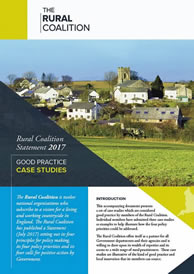
The Rural Coalition is twelve national organisations (which includes NALC) who subscribe to a vision for a living and working countryside in England. Given many shared values, we seek to be more influential by joining in common cause. Below we set out our key principles, policies and actions which we would urge the Government to apply to rural communities.
Our policy principles
The Rural Coalition believes that the following four principles should underpin policy making:
- Brexit discussions must recognise ‘rural’ is more than agriculture and the natural environment.
- All Brexit negotiations and post-Brexit policies must be rural proofed.
- Policies and funding must deliver a fair deal for rural communities.
- Decision-making, funding and delivery must be devolved and involve rural communities.
The Rural Coalition believes that the evidence points to four policy priorities
- A meaningful increase in the delivery of affordable housing in villages and small towns.
- Proper recognition of rural service delivery challenges and services designed to meet rural needs.
- Long-term support for social action, to help communities become more resilient.
- Business support and infrastructure which reaches rural areas, so the rural economy can grow and create quality jobs.
The Rural Coalition has produced Good Practice Case Studies read more here
The Good Councillors Guide to Neighbourhood Planning
NALC has announced the publication of the Good Councillors Guide to Neighbourhood Planning. This guide is the first of its kind and is aimed at local councillors who are interested in finding out more about their role in relation to neighbourhood planning.
The guide is available now to download from our Members Area.
Reform of data protection legislation
NALC published legal briefing L03-17 Reform of data protection legislation and the introduction of the General Data Protection Regulation which confirms legislative changes that will come into effect in May 2018.
This legal briefing is in our members area.
Neighbourhood Planning Bill approved

The Neighbourhood Planning Bill was among a group of 22 bills to receive Royal Assent on 27th April ahead of the dissolution of Parliament before the General Election.
The Bill includes provisions aimed at strengthening the role of neighbourhood planning, including requirements that decision-makers take account of "well-advanced" neighbourhood plans, and that such plans have full legal effect once they have passed a referendum.
The Neighbourhood Planning Act 2017 contains new powers for the government to direct two or more local authorities to develop joint plans. County councils will also have the power to prepare plans where districts do not have one.
It also includes restrictions on powers to impose planning conditions, including on local authority use of pre-commencement conditions, which now require written consent from the developer to be enforced.
Election of Chairman and Annual Parish Council Meetings
By the end of May every parish council should have held their Annual Parish Council Meeting, and the Chairman of the parish council should have called the Annual Parish Meeting (which must be held by 1st June each year).
We know that there is still confusion in some quarters about the requirements in relation to these meetings.
To summarise:.
- The Annual Parish Council Meeting must by law be held in May. This is a statutory requirement.
- The first business of the Annual Parish Council Meeting must be the election of the Chairman. This is a statutory requirement. If no Chairman can be elected the meeting cannot continue beyond this agenda item.
- There is no statutory requirement for a Councillor to be present at the Annual Parish Council Meeting in order to be elected as Chairman.
- The Clerk should not be in the chair during the election of Chairman, this is a common misunderstanding. A Clerk can never take the chair of a council meeting.
- The current Chairman must by law use their casting vote in the case of a tie in the election of Chairman (see NALC Legal Topic Note 2 for full details).
- The newly elected Chairman must sign a declaration of acceptance of office form before taking the Chair, which they should do immediately following their election.
- There is no statutory process or requirement for nominations, etc. Your council's Standing Orders may provide for this, but if they do not then any councillor can stand for election as Chairman at the Annual Parish Council Meeting without notice or nomination by another.
- The Annual Parish Meeting is not a Council meeting, but rather is a meeting of local government electors registered for the area for which it is held. It must be held between 1st March and 1st June. It is entirely separate from the Annual Parish Council Meeting, though is sometimes held on the same evening.
- The minutes of the Annual Parish Council Meeting must be approved at the next Parish Council Meeting, and must not be held over until the following year's Annual Parish Council Meeting.
New 2017 edition of Good Councillors Guide

A new edition of the Good Councillors Guide is now available. It can be downloaded for free from the members are of the NALC website (the username and password are in the Members Area of our website) or printed copies are available from OALC - £3 per copy + £1.20 p&p per copy
Updated March 2017 edition of Governance and Accountability
The Joint Practitioners Advisory Group (JPAG) has published an updated Governance and Accountability Guide. At their February meeting JPAG approved some modest amendments to the wording of the guide and while the content is not greatly changed a minor error affecting parish meetings has been corrected and some of the explanations in Part 5 have been made clearer.
This new 2017 edition of the guide applies to the statutory reporting of the financial year 2017/18, however JPAG has authorised the early adoption of the guide for 2016/17 on a voluntary basis, with the decision whether to do so resting with individual councils.
A copy is in the Members Area of our website.
Restricting increases in parish precepts
Below is a letter from Cllr Sue Baxter, Chairman, NALC
She is clearly signaling that ministers have deferred introducing a cap on precepts through the mechanism of a referendum if the increase is above a set level but that the deferral is conditional. Our sector of local government has had this particular sword of Damocles hanging over us for many years and the threat does not appear to be going away. There is a continuing failure by those in central government to grasp that while the percentage rise might be in the order of say 15% the actual amounts are very small (6p per week) when compared to those of the District or County Council.
Town and parish councils need to put more effort into communicating with your tax payers in your parish, tell them what you spend their money on, how you budget, don’t assume that people understand what a precept is. By educating your community they will hopefully come to understand what a good and efficient service you provide for them so that when they get their precept bill they will understand the line in the bill which says XXXX parish council 10% increase. They will know that the council negotiated a new grass cutting contract, that it made grants to vital village organisations and that 10% actually represents good value for money.
10th March 2017
Dear Colleague,
PARISH PRECEPTS
In December the government decided not to extend council tax referendum principles to any size of parish or town council for the 2017/18 financial year.
This was a direct result of extensive advocacy by NALC on your behalf to ensure councils continue to have the freedom and flexibility to set budgets according to local needs and priorities.
I very much welcomed this decision given the important and indeed growing role our councils play in communities and local democracy and I am pleased the secretary of state acknowledged this in his statement to the House of Commons and has listened to the sector’s concerns.
However the decision is very much a deferral and the government has issued a clear challenge to the sector to demonstrate restraint.
This point was reiterated to me in a letter from the local government minister which we circulated through the chief executive’s weekly bulletin, but given the importance of this issue I wanted to draw to your attention again some of his key points:
- Following careful consideration of responses to the technical consultation the government decided to defer the setting of referendum principles;
- The government has issued a challenge to demonstrate restraint when increasing precepts that are not a direct result of taking on additional responsibilities and will monitor the sector’s response to the challenge;
- Deferral can be revisited and government is prepared to consider ways in which large increases can be made more transparent to local tax-payers;
- Stressing the importance of all parishes making effort to comply with existing transparency code publication requirements;
- Thanking NALC and the sector for the constructive engagement during the technical consultation;
- Reiterating how much the government values parishes increasing role in service delivery.
Just this week the minister was interviewed for the forthcoming Spring edition of LCR and it is clear parish precepts remains very much a priority as he took the opportunity to restate his challenge to the sector to demonstrate restraint, stressing he had not taken extending council tax referendums to parishes off table, but adding he was also keen to work with NALC to promote other ways to fund local projects. This latter point we will be following up with him as we are keen to help councils by publishing some guidance on income generation.
However in terms of parish precepts themselves, the government’s own figures show increases to parish precepts in recent years have been very modest – going up by on average 6 pence per week – and we know this has been a direct consequence of councils taking on additional responsibilities such as services from principal councils, an increase in costs including National Insurance and funding not being passed on for example council tax support funding.
What you can do
While I have no doubt councils will respond positively to the government’s challenge in setting precepts for the forthcoming year I wanted to stress the importance of engaging with residents over increases and being transparent about how their money is spent.
On this latter point I want to encourage councils to step up their efforts to explain spending decisions and significant increases in precept in particular. This may include use of public meetings, newsletters and other publications, the local press such as newspapers or radio, social media including Facebook and Twitter, council websites, notice boards and information sent out with or at the same time as council tax demands.
I am very keen for us to share good practice in this area hence I would be grateful if you could tell us what you are doing so we can promote this more widely.
There are a number of other things we are doing to help councils such as developing good practice on income generation as mentioned above as well as on consultation and we will be publishing these in coming months.
We will of course be continuing to engage with the government to ensure they fully understand what is going on at the local level.
Finally I wanted to take the opportunity to thank you for everything you do. While these are challenging times for local government I am very proud of the role our councils play in improving our communities as I know you are increasingly doing more. Local services remain under severe pressure and I know our councils are often stepping up to the plate taking on new responsibilities and services.
Yours sincerely,
COUNCILLOR SUE BAXTER
CHAIRMAN
If you are two months or more in arrears with your Council Tax you cannot vote on the precept

Private Eye conducted an investigation into local authority councillors that were in arrears with their council tax. They sent a Freedom of Information request to 377 local authorities and the results have been mapped on their website http://www.private-eye.co.uk/issue-1436/councillors
If a councillor is in arrears for at least two months with their council tax they are prevented from voting on setting of the precept, or any decision relevant to that precept, Local Government Finance Act 1992, section 106.
The question arose as to whether this also applied to town and parish councillors. The short answer is YES. Please remember this when it comes to precept time.
The long answer supplied by NALC is the 1992 Act states that the section applies to local authorities as covered by sections 94 and 97 of the Local Government Act 1972. The problem is the definition of ‘local authority’ for those sections of the 1972 Act was in section 98 of the 1972 Act and all of those sections were repealed from 22 May 2012 by the Local Government Act 2000 but the 1992 Act was not modified to include a new definition. The result is that strictly there is no relevant definition of ‘local authority’ but the repealed sections of the 1972 Act used an extended form of the definition of local authority in section 270 of the 1972 Act which includes a Parish Council. Therefore if asked a court would hold that a Parish Council is covered by section 106 of the 1992 Act. Thus any parish councillor who is in arrears of council tax for two months or more cannot vote on the precept or associated matters. This restriction is absolute and cannot be removed by a dispensation.
Section 137 Local Government Act 1972 limit for 2017- 8 announced
The Department for Communities and Local Government has confirmed that the appropriate sum for parish councils for the purposes of section 137(4)(a) of the Local Government Act 1972 for 2017-2018 is £7.57.
Separate trade union for clerks - Association of Local Council Clerks (ALCC)
If your clerk is a member of the Society of Local Council Clerks (SLCC), and we hope they are, please read this:
In October 2016 the professional body for the parish and town council sector, the Society of Local Council Clerks (SLCC) reorganised its business and corporate governance structures and a separate, independent trade union was formed which will be called the Association of Local Council Clerks (ALCC)
The Association of Local Council Clerks (ALCC) is the only trade union dedicated to supporting people working in the local council sector across England and Wales.
On its website it states “We are committed to serving the interests of our members and stand for their right to be respected, listened to and treated fairly whilst at work. Our members benefit from professional support, advice and representation in accordance with our approved terms of service.”
Henceforth, any SLCC member who is seeking advice about their personal employment circumstances (rather than advice for their role of Clerk to a council) will be referred to the ALCC Advice Centre and a separate membership fee will be levied annually. ALCC will provide advice and can represent their members at hearings related to their employment e.g. disciplinary, grievance, or redundancy negotiations.
The annual fee for the ALCC will be £10 for an individual whose council is already a member of SLCC or £50 for those who do not have SLCC membership. This membership fee is for the employee’s own account whereas the council can, and usually does pay the SLCC fee.
The ALCC has membership from over 2,000 councils across England and Wales.
More information is available on www.alccunion.co.uk
State of Rural Services - Rural England

Today (17th January 2017) sees the publication of the first State of Rural Services report to be published by Rural England.
It recognises that providing accessible and quality services to rural communities poses particular challenges given the geography of small and scattered settlements. And these difficulties are further compounded by the loss of economies of scale, additional travel required and the delivery costs involved.
However, innovation and good practice can address many challenges, often by working with local communities including through local (parish and town) councils. Also the report finds that having a sound evidence base about rural services is equally important.
According to Rural England (NALC is a stakeholder member of the group), this report has been produced in response to growing concerns about the state of knowledge. Policy makers and those delivering services need a proper understanding of the position and trends in order to take informed decisions. It is the aim of this report to inform policy debate and to assist policy making for the benefit of rural residents and businesses.
The full report is here
Cllr Sue Baxter, chairman of NALC, commented:
“NALC welcomes the publication of this authoritative report on the state of rural england in 2016. England’s 10,000 parish councils play a huge and increasing role in these communities and would recognize the reports conclusions that access to services particularly transport and broadband are falling behind urban areas and that community volunteering including involvement in parish councils is key to the quality of rural life. NALC would call on the government to support and encourage this volunteering and ensure that the needs of rural areas are not overlooked as Brexit gains pace.”
Plunkett Foundation - Call to Action

This call to action aims to raise awareness within Town and Parish Councils across the UK of the potential for community co-operatives to address problems local communities are facing and the support available from the Plunkett Foundation.
Our goal is to provide Town and Parish Councils with the tools and information they need to either get involved directly, or to pass onto other community groups and individuals in their locality.
The Plunkett Foundation and Rural Community Co-operatives
The Plunkett Foundation is a national charity that helps communities across the UK to set up and run community co-operatives; enterprises that are owned and run democratically by large numbers of people in their community. Community co-operatives help people to tackle a wide range of issues, from social isolation and loneliness to poverty, and come in many different forms including community shops, pubs, cafes, woodlands, food and farming enterprises and anything in between. Since 1919, Plunkett has supported over 500 such enterprises to set up by providing help, advice, and when funding allows, financial support.
Our strategy
Plunkett’s 2015-17 strategy aims to build on our achievements to date, and inspire an even larger movement of people who solve their challenges by running community co-operatives. Key ambitions within the strategy include:
- Inspiring more communities than ever before to consider co-operative solutions to the problems they face;
- Applying the co-operative solution to a wider range of business models, for example, transport, housing and health and social care;
- Reaching all parts of the UK, particularly where there is less of a tradition for co-operation;
- Increasing our impact in addressing place based problems such as poverty, isolation and loneliness.
Call to Action
It is very rare for Town and Parish Councils to be directly involved in the setting up or running or community co-operatives, but in our experience, they have been critical to the early stages of their journey in some way. Very often, it is the Town or Parish Council that has spotted an opportunity to save a valued asset or service, or called a public meeting, or highlighted potential avenues of funding.
This call to action, sets out the various ways in which Town and Parish Councils can get involved.
7 ways to take action:
- Consider registering land and buildings in your community as an Asset of Community Value (or support another community group to do so).
- The 2011 Localism Act allows communities and parish councils to nominate buildings or land for listing by the local authority as an Asset of Community Value.
- In the event a listed asset comes to be sold, a moratorium on the sale (of up to six months) may be invoked, providing local community groups with a better chance to raise finance, develop a business and to make a bid to buy the asset.
- More information is available in this helpful tool produced by Locality or visit the Locality website at www.locality.org.uk
- Explore developing a parish or neighbourhood plan, and incorporate the community ownership solution to problems highlighted by your residents
- Neighbourhood Planning was introduced in 2012 to enable communities to have more say in the future development, regeneration and conservation of their area. Plans are based on a robust programme of community engagement and consultation of the views, aspirations, wants and needs of local people and can become part of the statutory development plan for the area.
- By going through the Neighbourhood Planning process, you will certainly identify problems your community is facing, and potentially opportunities for community ownership to be part of that solution.
- More information is available in this helpful tool produced by CPRE or visit the CPRE website at www.cpre.org.uk
- Promote the concept of community ownership and the support available from the Plunkett Foundation via your community newsletter and website
- The Plunkett Foundation offer free support by phone, via our website and through our national network of advisers.
- A guide to the support we can offer and how we work is appended here or can be found at www.plunkett.co.uk/gettingstarted You may wish to signpost a link to this on your website, or refer it to the editor of your parish newsletter.
- Call a public meeting in the event an asset or service in your community becomes at risk, and help to establish an independent working party to consider the community ownership approach.
- If a valued service or asset is at risk of being lost to your community, e.g. the last village shop, or a popular community building such as a pub, club or faith based building, you could call a public meeting to seek views on whether there is appetite to save it in community ownership. Plunkett can send guidance for running such a meeting, including presentations, case studies and explanatory guides.
- This doesn’t mean it is the responsibility of the Town/Parish Council to lead the next steps – the purpose of the meeting is to establish whether there is appetite for an independent working party to be established.
- Support community groups that are exploring community ownership by joining their committee, or contributing to their feasibility costs
- Once an independent working party is established to assess the demand and feasibility for a community owned enterprise, it can be helpful for the Town/Parish Council to nominate a councillor to be part of the group. Their local knowledge and understanding of the planning system could be vital to the groups success.
- Alternatively, or additionally, you might want to issue a small bursary award to the community group to help them with early stage feasibility and planning costs. This might be to fund meeting room space, printing, consultation exercises or professional fees.
- Consider purchasing the asset the community is exploring through a Public Works Loan and rent or lease the asset back to the community
- Town and Parish Councils (subject to eligibility criteria) have access to affordable public loan finance (Public Works Loan) which they could apply for and use to purchase the asset the community has in mind. Once in parish ownership, it could then chose to donate, rent or lease to the community co-operative for them to take on the day to day management.
- More information on Public Works Loan finance is available here or visit www.dmo.gov.uk
- Join the Plunkett Foundation for £75 as a contribution towards helping other rural communities access community ownership advice and support.
- Plunkett receives over 750 new enquiries each year from town and parish councils and other community groups seeking advice on community ownership. This service is currently provided free of charge, but it is only possible through a combination of donations, membership income and some project income.
- You don’t need to be a member to receive advice from Plunkett, but members do benefit from regular news updates, bulletins and invitations to networking events and meetings.
- You can join Plunkett by visiting www.plunkett.co.uk/become-a-member
Battle’s Over – A Nation’s Tribute - 11th November 2018

On the 3rd August 1914, Britain’s Foreign Minister, Sir Edward Grey, was looking out of his office window. It was dusk, and gas lights were being lit along London’s Mall, leading to Buckingham Palace, when he remarked to a friend, "The lamps are going out all over Europe; we shall not see them lit again in our lifetime”. Our country was about to be plunged into the darkness of the First World War, and it would be four long years before Britain and Europe would again experience the light of peace
In commemoration and remembrance of the end of the war and the many millions who were killed or came home dreadfully wounded, a chain of 1,000 beacons will be lit throughout the United Kingdom, Channel Islands, Isle of Man and UK Overseas Territories at 7pm on the 11th November 2018 – a century after the guns fell silent.
You will be pleased to know therefore, that more than 320 town and parish councils have already confirmed their involvement, and will be lighting a beacon at 7pm on 11th November 2018, as part of their plans for this important anniversary that day.
The event will also commemorate the huge army of men and women on the home front who, often in dangerous and exhausting conditions, underpinned the war effort - keeping the wheels of industry turning, bringing the harvests home and ensuring the nation did not starve.
The beacons will symbolise the ‘light of hope’ that emerged from the darkness of war, and we hope that your council and local community will join us in this important national commemoration on Sunday 11th November 2018, especially as the majority of you would have had a previous member of your family involved in this four year conflict, so will become a personal tribute in their memory.
Detailed co-ordination begins in April 2017, when we will publish a special Guide to Taking Part, similar to that produced for Her Majesty The Queen's Birthday Beacons on 21st April this year. If you can confirm your involvement before the end of March 2017 we will be able to include your organisation in the guide’s acknowledgements pages before it is distributed to others encouraging their involvement too.
The reason for sending this information so far in advance, is because we understand from those already participating, they have started to plan their events for this commemoration.
Participating councils, organisations and community groups will receive a special certificate as a permanent reminder of their involvement in this special tribute.
There are a number of cost-effective ways of participating in the chain of beacons.
(1) Use existing beacon braziers on tall wooden poles erected in 1988 and for other recent anniversaries.
(2) Use gas-fueled beacons lit for The Queen's Diamond Jubilee in 2012.
(3) Use the gas-fueled VE beacons lit to commemorate the 70th Anniversary of VE Day in 2015.
(4) Use the gas-fueled beacons lit for The Queen's 90th birthday in April this year.
(5) Build a traditional bonfire beacon.
I would be grateful if you would confirm your involvement by providing me with the following details as soon as possible to ensure that you are included in the guide when published, and put on the events website at the end of April 2018.
Name of organisation:
Name of beacon co-ordinator:
Address of beacon co-ordinator:
Telephone number:
Mobile number:
Email:
County:
Country:
Beacon location:
Please confirm if your beacon will be open to the public or will be lit at a private event for family and friends. This is important because private beacons will not be included in the acknowledgements pages of the guide but will be included in the list kept in memory of this unique occasion.
When planning your beacon, your local newspaper could help you in contacting a relative of someone who served their country in WWI so you can invite them to light your beacon. This will also help you to gain media coverage for your event while providing a personal and touching aspect to the occasion, so do hope your council will join us in this special tribute and look forward to hearing from you soon.
Yours sincerely,
Bruno Peek LVO OBE OPR
Pageantmaster, Battle's Over - A Nation's Tribute 11th November 2018
Tel: + 44 (0) 7737 262 913
Email: brunopeek@mac.com
Community Asset Transfers
This guide, produced by Locality in partnership with the Local Government Association and the National Association for Local Councils, highlights the strategic importance of Community Asset Transfer (CAT) for councils and communities in England.
Community asset ownership isn’t new – there is a long and rich history going back centuries of communities owning and managing land and buildings2. More recently, CAT is the recognised mechanism to enable the community ownership and management of publicly owned land and buildings, to enhance social, economic or environmental wellbeing in local areas.
The positive opportunities as a result of CAT have been given fresh impetus by the present
Devolution agenda. However, there continues to be a need to inform and encourage councils to work with local people, Parish and Town Councils and other stakeholders to ensure that the role that CAT can play in building resilient communities and thriving neighbourhoods is maximised.
In order to help councils to be clear about the set up and ongoing resources required to get the process right, this guide reiterates the critical success factors that underpin CAT. There also advice on the risks and mitigating actions that should be considered, and a step-by-step approach to developing a fit for purpose CAT policy to help inform council decision making.
Therefore, whether your council is new to CAT and you are seeking to make the case for its strategic adoption, or you are looking to scale up and embed this approach across departments, this guide aims to help officers and members better understand how CAT can help support your council's priorities.
Planning Aid Direct – Service Change from 1st August 2016
Planning Aid Direct offers free and independent planning advice via e-mail at advice@planningaid.rtpi.org.uk and guidance on a range of planning issues via the Planning Aid Direct web-site at: www.planningaid.co.uk
The range of advice items on the Planning Aid Direct website is currently being updated and added to by Planning Aid staff.
NB: The telephone Advice Line has been temporarily suspended from 1st August. This is to allow Planning Aid to review its need, the capacity of others providing something similar and the potential for it to be developed in a more sustainable way.
Being a good employer 2016

All town and parish councils are employers.
Therefore all councillors need to be aware of their responsibilities as an employer. All councils would benefit from having a separate Personnel or Staffing Committee to discuss matters such as the clerks’ annual appraisal and pay which should not be considered in public.
To help your council understand more about its employment responsibilities NALC has updated Being a Good Employer. It will be available to download free from the Members Area of our website after the middle of June 2016 or as a printed booklet from OALC cost £3 per copy + £1.20 p&p
Resources to make things happen and improve your community

Just Act helps anyone involved with a community project to find information. The 10 Steps go through the key stages of running a project and the Knowledge Bank has information for different types of projects. - See more at: http://www.justact.org.uk/#sthash.UNOvk3ma.dpuf
There is a good case study arising from a study of 120 community buildings in Oxfordshire called Managing energy use in community buildings, more information here
Council tax levels 2016-17
For those that are interested, National Statistics published on March 31st the annual statistics on council tax levels set for 2016-7.
They report that "The average Band D precept charged by a parish or charter trustee for 2016-17 will be £57.40, and increase of £3.28, or 6.1%, from 2015-16."
The report which goes into greater detail can be found here
NALC is campaigning for the government to introduce a limited third party right of appeal for town a
The planning system is one of the few decision-making processes that gives no right of appeal to affected third parties. NALC feels the government should introduce a limited third party right of appeal by giving parish councils a right to appeal planning decisions to the Planning Inspectorate.
NALC believes there is a fundamental imbalance in the planning system. Under current rules, if a council refuses a planning application, the applicant is allowed to appeal to the Planning Inspectorate. If a council approves an application, no one has the right to appeal. With the national presumption in favour of sustainable development throwing the planning system into disarray, in the interest of justice, the government should give parish councils the right to appeal planning decisions.
If your council feels strongly about this then you might like to sign the petition which is here
The closing date is 19th April, so far there are 8,954 signatures. If 10,000 signatures are gained the government will have to respond. And if 100,000 signatures are reached then it will be considered for debate in parliament.
Neighbourhood Plan Roadmap - new updated edition available
This guide is for all those involved in, or thinking about, producing a Neighbourhood Plan, and for those who are just curious to find out more. Whilst other guides are predominantly concerned with the legislation and process, Locality has attempted, wherever possible, to include guidance on good practice and worksheets for carrying out each part of the plan. It is available here
Do you need statistics for your parish?

OALC raised sometime ago with NALC and ONS the problem of the lack availability of small area statistics for Parish Meetings with less than 100 population or 40 households..
In light of this, the Office for National Statistics (ONS), the UK's largest independent producer of official statistics, is undertaking a review of the availability of information on a small area.
ONS conducts the census in England and Wales every 10 years. Following the 2011 Census, around 10% of Civil Parishes in England had a population too small to be allocated a population estimate. In these instances, statistics were not released for these civil parishes. ONS provided 2011 Census population estimates (number of households, males and females only) at the postcode level.
The ONS recognises the importance of producing statistics for parishes. They have subsequently undertaken research to identify a solution where statistical data could be published for the majority of parishes.
They want to share the findings of this research with you and understand your requirements for statistics at the civil parish level. You can do so by reading the research and completing their questionnaire.
You can respond using the online survey: https://consultations.ons.gov.uk/ons-geography/ons-geography-products-and-services-review or submit a MS Word version via email to ons.geography@ons.gsi.gov.uk or by post to:
ONS Geography Customer Services, Office for National Statistics, Segensworth Road, Titchfield, Fareham, Hampshire PO15 5RR
The Review is now open and will close on 7th March 2016. They will publish an initial summary of findings within 12 weeks of the Review closing date. Your response will be treated in accordance with their privacy policy. If you have any queries about the Review please email or ring 01329 444971.
Financial Services Compensation Scheme (FSCS) to cover deposits of small local authorities

From 3rd July 2015 the UK Financial Services Compensation Scheme (FSCS) will cover the deposits of small local authorities. The definition of small local authority being one that has an annual budget of less than €500,000 (currently £355,700 as it is based on the exchange rate on 3rd July each year). This will extend cover to over 8,000 parish and community councils.
The UK FSCS will cover the first £75,000 of eligible deposits, a reduction from the previous figure of £85,000. The previous limit will remain in force for individuals and small companies until 31st December 2015, but the new rate will apply immediately for councils.
The FSCS ensure that eligible bank depositors have access to their eligible deposits within fifteen business days of receipt of a request from the depositor which contains sufficient information to enable the FSCS to make a payment. The formal announcement of the change can be found on the Bank of England’s website.
NALC Financial briefing note F05-15 is in the Members Area of the OALC website
The Big Pathwatch launched by the Ramblers Association
The Ramblers Association has launched a new programme aiming to record the condition of the network of paths across England and Wales with a view to improving maintenance.
The initiative is aimed at motivating communities to survey the rights of way network – footpaths, bridleways and byways and then to report their findings, both good and bad. The Ramblers Association has developed a purpose-built app that allows walkers to register the problems they encounter and pinpoint exactly where they have found them – and a webpage which serves the same function. Once the survey closes later in the year, the aim is to produce the first comprehensive nationwide analysis of the condition of paths.
The Ramblers want to work with councils to find cost-effective solutions to maintain our path network. The results of the Big Pathwatch will help it identify areas which are in good repair and find good practice. It will also help it find out which maintenance issues cause walkers the most difficulty, which should help councils prioritise reported problems. Additionally, the project should increase understanding of the impact of volunteer path maintenance teams. Ramblers’ volunteers already clear and maintain paths in nearly every highway authority across England and Wales and they are looking at how to build on this work where it is most needed.
The Ramblers is encouraging everyone to put on their walking boots, download the Big Pathwatch app – or grab a pen and paper – and help to inspect our rights of way! More information at www.ramblers.org.uk/BigPathwatch
English Heritage split up

Did you know that since April English Heritage has split into two organisations? The first organisation which retains the English Heritage name and logo, will look after the National Heritage Collection, consisting of more than 400 historic sites. Historic England, with a new and different logo, will cover planning, heritage designation, conservation while providing research, guidance and grants.
There are 28 UNESCO World Heritage Sites in the UK, Blenheim Palace was designated in 1987. Oxford Economics found heritage based tourism directly accounts for at least £5 billion of this countrys GDP and 134,000 jobs. Oxfordshire has a wealth of heritage based tourism, from the Oxford colleges through to literary and tv/film location attractions.
Plain English Guide to the Planning System

DCLG has issued a 20 page Plain English guide to the Planning System
It covers all the main basics:
- the purpose of the planning system
- key decision takers: councillors, officers, Secretary of State, Planning Inspectorate
- National Planning Policy
- Nationally significant infrastructure projects
- Strategic planning, duty to cooperate
- Local Plans (flow diagram)
- Neighbourhood planning (flow diagram)
- Contributions and community benefits
- Permitted development rights
- Obtaining planning development (flow diagram)
- Planning enforcement
- Planning appeals
Quality Parish Council Scheme is now Local Council Award

After prolonged consultation the new scheme was launched on 6th January 2015. The scheme has been designed to provide the tools and encouragement to help councils improve, as well as promoting and recognising those councils that are already well run and are examples of good practice.
Councils can apply for an award at one of three levels:
- The Foundation Award demonstrates that a council meets the minimum requirements for acting lawfully and according to standard practice.
- The Quality Award demonstrates that a council achieves good practice in governance, community engagement and council improvement.
- The Quality Gold Award demonstrates that a council is at the forefront of best practice and achieves excellence in governance, community leadership and council development.
The scheme sets out the criteria required to attain each level of the award. It is hoped that councils will want to progress through the levels where resources allow. To achieve any level of award Councils must publish the required documents and information online and pass a resolution at full council confirming their availability.
For more information on the Local Award Scheme, the criteria and a step by step guide to the process for applying go to the NALC website http://www.nalc.gov.uk/our-work/local-council-award-scheme
There are two fees; a registration fee paid to NALC, this is £50 irrespective of the size of the council or the level of award. And an accreditation fee which varies from £50 - £200 depending on the size of the council and the level of award.
The accreditation lasts for four years.
The Bribery Act 2010 – impact on local councils, a reminder

NALC have up dated their legal briefing L07-11 on the Bribery Act.
Bribery undermines democracy and the rule of law. Routine local council activities and decision making may expose councils to the risk of bribery offences being committed. Such risks could, for example, relate to entering into contracts for the supply of goods and services, commenting on planning applications, the purchase and disposal of land and premises, recruitment and employment practices.
Councils may be offered corporate hospitality/ gifts by those who want to supply goods and services to them. Bona fide hospitality to establish cordial relations or other business expenditure for activity intended to promote products and services is recognised as an established and important part of doing business. It is not the intention of the 2010 Act to criminalise such behaviour.
Hospitality and promotional or other similar business expenditure can, however, be employed as bribes. The greater the expenditure and the more lavish the hospitality provided, the greater the inference that it is intended to influence and to constitute bribery. This will depend on the nature of business and each council will need to form a view on what is acceptable corporate hospitality. The timing of any hospitality and its purpose will also need to be considered. Councils are encouraged to adopt a gifts and hospitality policy and to keep a register of gifts and hospitality received by staff and councillors. For many small councils the prospect of them receiving any hospitality is laughably remote, for larger councils there is greater potential for hospitality and hence a possible opportunity for bribery.
In England councillors may be subject to obligations under the Code of Conduct adopted by their council, which relate to transparency about the receipt of gifts or hospitality. For example, if a council has adopted NALC’s code of conduct for parish councils (please see NALC Briefing L09-12 – NALC template code of conduct for parish councils for more information) gifts or hospitality worth more than an estimated value of £50 which a councillor has received by virtue of his or her office is an Appendix B interest which must be registered with the Monitoring Officer. Unless they have obtained a dispensation, councillors who have an Appendix B interest in a matter which is being considered at a meeting cannot vote on the matter at the meeting. They may only speak on the matter if members of the public are also allowed to speak at the meeting.
Direct Information Service (DIS)

Do you have trouble keeping up to date with all the news and views for town and parish councils?
DIS is a fortnightly news service from NALC which can provide you with a one stop shop for all the latest information which is relevant to our sector.
With a round up of government statements and publications, up to date legal information, ministerial statements, press releases and consultations from across the sector, along with regular events and vacancy listings, DIS is a great source of information.
Available in a hard copy, or delivered by e-mail (DIS Extra) up to five days earlier, and as a slightly enhanced version.
Reflecting the diversity of councils across the country, a typical issue will include a broad range of information on all potential aspects of a councils life including everything from reports on relevant employment tribunals to analysis of latest local government policy, and examples of case law.
All articles where relevant will have follow up points, including websites, postal addresses and telephone numbers to help you find out more detailed information.
DIS are now producing a funding bulletin as well with various sources of funding from Heritage Lottery Funding to Local Sustainable Transport Fund. Have a look at the Funding Bulletin here
Subscription to DIS
To subscribe to DIS complete the online subscription form. Member councils receive a substantially discounted subscription rate which is £115 for 26 issues for the printed version; £90 +VAT for DIS Extra - email version
Download a sample copy of DIS.
DCLG Allotment disposal guidance; safeguards and alternatives
This document is a guide to how disposal decisions will be handled by the decision makers involved. Information and advice is provided on the criteria used to assess whether local councils can be granted consent to dispose of land used for allotments. The guide’s main purpose is to help councils decide whether to apply for consent to dispose of allotment land and to provide clarity on how disposal applications will be assessed.
The guide is here
Parishes encouraged to make direct proposals to DCLG Under Sustainable Communities Act, 2007
The legal order allowing parishes to formally make direct proposals to the DCLG Secretary of State under the Second Round Invitation of the Sustainable Communities Act, 2007 – formally commenced on Monday 14, October, 2013.
NALC is promoting parish use of the Act in forthcoming issues of the E-Bulletin and DIS as the parish sector now collectively needs to focus on promoting appropriate parish proposals and indeed encouraging parishes to submit direct proposals to DCLG under the Act. All parishes in England need to have sight of the link on the NALC SCA web-page when and before making proposals under the Act.
A simple 4-step process has been formulated by NALC and is recommended to parishes to follow before formally submitting their proposals under the Act, to DCLG. A submitting parish council should;
1) Consult its community as to which ideas residents would like to have considered for a direct proposal;
2) Then formally agree with its community (possibly in response to a local policy problem which can’t otherwise be resolved locally) the wording of a formal proposal;
3) Then the council needs to formally resolve to pass the proposal and send it to DCLG at the Barrier Busting website.
4) DCLG then responds saying either ‘yes’ the proposal is passed (in which case the council uses the Barrier Busting Tracker at the above link to track progress with implementing the proposal) or ‘no’. If DCLG say ‘no’ the council can leave it at that and not re-submit a proposal, or can re-word a proposal and submit it to chris.borg@nalc.gov.uk to ensure that the NALC SCA Board makes a decision as to whether to re-submit it (or not), to DCLG. If the Board says ‘no’, it must give reasons to the council. In most cases, though, the Board will probably re-submit a (possibly amended) proposal to DCLG on the council’s behalf and the same process outlined immediately above is followed.
Councils are strongly encouraged to start the process of submitting direct proposals to DCLG as soon as possible.
Working with your Council (WWYC) becomes Introduction to Local Council Administration (ILCA)

The introductory qualification Working with Your Council has been discontinued and is being replaced by the online Introduction to Local Council Administration. The new learning tool has five sections which can be studied in your own time. Each of the five modules contains activities, questions and explanations. You can gain a certificate and CPD points on successful completion. The modules are:
- Core roles
- Law and procedures
- Finance
- Management
- Community
To register and find more information go to the SLCC website The cost is £99 +VAT for SLCC members.
Local Councils Explained 2013
Local councils EXPLAINED is NALC’s book for local councils in England and Wales.
It has over 200 pages which clearly explain the role of parish, town and community councils, their councillors and officers and how they work. It offers comprehensive and practical guidance about the legal issues that local councils are exposed to.
NALC’s book will equip local councils with answers to frequently asked questions about all aspects of their work. There is commentary about:
- committee and staff structures
- publication schemes
- handling freedom of information requests
- data protection
- neighbourhood planning (England)
- the general power of competence(England)
- preparing for meetings and agenda preparation
- rules of debate at meetings
- how to chair meetings
- work after meetings
- preparation of minutes
- code of conduct
- political groupings
- publicity about the work of a council
- councillors’ interests and dispensation requests
- predetermination
- precept setting and council tax increases
- accounts, audit and financial management
- contract negotiation
- staff management
- parish and community meetings
- working with volunteers, businesses, charities and other local authorities
- dealing with the media
- handling complaints
- judicial review
Local councils EXPLAINED:
- - is easy to understand
- - uses examples, tables and diagrams
- - contains up-to-date statutory references
- - is competitively priced at £49.99 only for NALC members (15% discount) and
- - includes updated model standing orders (an electronic version of which is free to NALC members.
How to order:
Local councils EXPLAINED is priced at £49.99 +P&P for members & £59.99 +P&P for non-members.
The order form is available here.
Complete the form and send directly to NALC.
Vexatious request for information, new guidance from Information Commissioner
New guidance was issued by the Information Commissioner in May 2013. Under Section 14(1) Freedom of Information Act 2000, public authorities do not have to comply with vexatious requests. It is the request which is vexatious, not the individual making it!
In cases where the issue is not clear-cut, the key question to ask is whether the request is likely to cause a disproportionate or unjustified level of disruption, irritation or distress.
Vexatious = “manifestly unjustified, inappropriate or improper use of a formal procedure”
See the complete guidance on the ICO website
The average age of a parish councillor is 60.2 years
How the Localism Act hands power to older generations.
An interesting report was published in September 2012 by the Intergenerational Foundation, an independent, non-party-political charity that exists to research fairness between the generations in order to protect the rights of younger and future generations in British policy-making.
Its findings were:
- that councillors are getting older
- few young people become councillors
- older people are heavily over represented on local councils
- councillors live in properties which are more valuable than average for the area they represent
- the age bias among councillors exacerbates the housing crisis facing younger people
- the Localism Act hands more power to older people.
While some of the conclusions are debatable, it is correct there are very few town and parish councillors under the age of 30.
The report goes on to reveal that women remain significantly under-represented among town and parish councillors. Although females make up more than 50% of the population in England and Wales, 66% of parish councillors are male and 34% female. 67% of town councillors are male and 33% female. There are significant variations in gender representation between the regions. In the South-East of England the proportion of female councillors rises to almost two-fifths (39.7%).
The Local Government Chronicle (18.7.2013) magazine findings reinforce this, 23% of principal council chief executives were female, while only 12% of leaders were female although since the election in May the percentage has crept up to 13%.
How does your council measure up? What is the age and gender profile of your council?
Of course, it can be difficult to get willing volunteers to become councillors. However, next time your council has a vacancy think about the profile of your council, could it be more representative of the whole community?
The General Power of Competence - empowering councils to make a difference
The Power of General Competence was introduced in the Localism Act 2011 and came into effect in February 2012. The new power is radical in that it allows a council to act as an individual would. (See OALC briefing note in the members Area of this website under OALC briefings and presentations). Town and parish councils can only use the Power if they are eligible. Eligibility depends on satisfying three criteria:
- two thirds of councillors have stood for election (they may have stood unopposed)
- the clerk is qualified - Cilca or higher recognised qualifications
- the council resolves to grant itself the Power.
The number of councils in Oxfordshire with the Power is limited; OALC are aware of Little Milton, Didcot, Bicester, Banbury and Minster Lovell Town and Parish Councils.
LGA had commissioned research into the Power and what is was being used for since 2012. The research identified a number of case studies and drew some conclusions on the constraints on the wider use of the GPC. Eric Pickles was very keen to encourage greater use of the Power stressing the possibilities for enterprising councils.
Growth and Infrastructure Act 2013 - Village greens
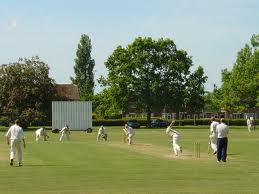
Under the Commons Act 2006, land can be registered as a town or village green if it can be shown to have been continuously used as of right for lawful sports or pastimes for at least 20 years by a signiciant number of inhabitants of the neighbourhood.
The frequent use of town or village green applications to prevent development has prompted the government to introduce three changes to the law through the Growth and Infrastructre Act 2013:
- a reduction in the deadline for bringing in town and village green registration applications from two years to one year
- giving landowners the right to lodge a formal statement with the commons registration authority which has the effect of interrupting any ongoing period of recreational use. (These two changes are not yet in force.)
- finally the Act prohibits applications once the land has been allocated for development - including a proposed allocation - or is the subject of a planning application. This moratorium lasts until the allocation is no longer in place, or the land is no longer subject to a planning application or permission. (This change came into effect immediately on 25 April 2013)
More information here on the DCLG website
Updated Guidance from DCLG on Code of Conduct and Register of Interests
The Department for Communities and Local Government has issued revised and updated guidance for councillors on the Code of Conduct. It is called Openness and transparency on personal interests, a guide for councillors. It supersedes that issued in August 2011.
There has been confusion and differing interpretations of the legislation particularly concerning whether a dispensation was required by councillors to consider the precept. This advice clearly states that a dispensation is not needed.
The revised guidance can be found here
Reminder about use of email by town and parish councils
NALC have issued a useful reminder about the use of emails; their advice is aimed primarily at clerks but does have relevance for councillors too. Clerks and councillors both need to consider what they retain on their computers. Increasing use of Freedom of Information requests means that any relevant emails will need to be produced within 20 days of the request.
Councils should ensure that the tone and language of internal and external email correspondence sent by their employees is always professional and courteous. Councils should consider emphasising the following points to employees sending work emails:
- Putting a subject in the subject line to make it clear what the email is about;
- Using “urgent” only if the email is genuinely urgent;
- Using the appropriate level of formality for greetings (e.g. Dear Mr Jones or Dear Sue, Dear Cllr Smith,);
- Ending emails appropriately (e.g. Yours faithfully or Yours sincereley);
- Not overusing capital letters or bold text, which can be seen as aggressive;
- Replying within an appropriate timeframe, even if just to send an acknowledgement;
- Checking grammar and spelling;
- Re-reading emails before sending them and
- Setting “out of office” responses and providing alternative contact details when employees are not in the office. This should include the email address of the person to whom Freedom of Information requests should be sent.
Fraud risks in parish and town councils - advice for councillors
Following a succesful training event on Finance we would like to draw your attention to a leaflet issued by NALC, SLCC and Audit Commission. It sets out a useful check list of Do's and Don't's on fraud, behavioural, financial and organisational indicators. Click here to see the leaflet.
Local Government Charity Toolkit
The Toolkit is a free online reference manual developed by the Charity Commission in liaison with the Local Government Association, the National Association for Voluntary & Community Action and the Commission for the Compact. It highlights key issues and is designed to help local authorities work with charities and to explain the legal and fiscal framework within which charities must operate. It is a useful guide for sub-committees and officers administering charitable assets in the council’s care and for councillors nominated to serve as charity trustees. It uses real case studies to do this and it highlights where things can go wrong and offers a range of tips on how to avoid the pitfalls. The Toolkit also provides information on the possible options for modernising, merging, or winding up charities and highlights the legal, financial and governance issues that arise from the relationship between local government and charities that can get in the way of an effective partnership.
Please see the following links to the Charity Commission website. They consist of a link to the Councillor’s Guide to a Council’s Role as Charity Trustee and a link to the Local Government Charity Toolkit:
|
April-2010 |
|
|
Councillors Guide to a council's role as charity trust - PDF |
April-2010 |
Guidance on burials

The Ministry of Justice issued guidance for burial ground managers, custodians of war memorials, archaeologists and others directly connected to the upkeep and maintenance of cemeteries.
This guidance has been long awaited and will be of interest to local councils involved in cemetery management. It covers six themes: natural burial grounds – guidance for operators; guidance for burial ground managers; guidance for custodians of war memorials in England and Wales; managing the safety of burial ground memorials; memorial safety guidance: frequently asked questions; and a statement on burial law and archaeology. This guidance can be downloaded at http://www.justice.gov.uk/guidance/burials.htm.
War Memorial Theft - Prevention and solutions This helpsheet provides guidance on preventing theft from war memorials and what to do if theft has occurred. Theft commonly affects war memorials made from metals with a scrap value such as lead and bronze. It is important to take steps to assess and reduce the risks of theft before it is too late.
New Community Shops Network
An online support network for people involved in setting up and running community-owned village shops has been launched: The network, which already has 150 members, is intended to boost the number of rural communities that are taking over the management of local shops at risk of closure. The Plunkett Foundation, a membership organisation that offers funding and practical guidance on setting up community-owned or co-operative local services, set up the network.
Through its Village Core programme, the foundation provides grants of up to £20,000 – funded by the Esmee Fairbairn Foundation – and loans of the same amount that the community takes out with lender Co-operative and Community Finance. The community then raises a contribution of the same amount, which provides a total package of around £60,000 that, according to the Plunkett Foundation, is the average start-up cost for a community-owned shop.
The new Community Shops Network - register online at www.plunkett.uk.net
The Public Sector Mapping Agreement
The new Public Sector Mapping Agreement (PSMA) offers town, parish and community councils the opportunity to access a range of Ordnance Survey products. The PSMA will enable you to share that data between the public, private and voluntary sectors in your area. And local councils can register from now for a licence.
Geographical data can be used to underpin and therefore enable all town, parish and community councils to provide services, which not only meet local needs, improve quality of life and sustain community well being. They will have access to wider information and perspective which they need to make difficult choices about resource allocation, better data and intelligence at ward and neighbourhood level
From 1 April 2011 English Parish Councils and Welsh Community Councils are eligible to join the PSMA giving them access to a wide range of Ordnance Survey map data free at the point of use.
For further information, please visit our PSMA website
The Parish Councillor's Guide by Paul Clayden - £15.95

This ever-popular book, regarded as invaluable for all parish councillors and clerks, has been updated to a 20th edition to reflect the large amount of new legislation affecting parish and community councils.
Please click here for further information or to buy online.
Councillor Commission report
The Councillor Commission – organised by the local government magazine The MJ and De Montfort University Leicester and supported by NALC – publish its final report ‘The Voice of The Councillor’ this week do read it and consider its findings and recommendations.
When the Commission was launched NALC pressed for our sector and our 10,000 councillors not to be overlooked, securing representation on the Commission and a dedicated stream of work to ensure the voice of parish and town councillors was heard. The 124 page report (which is in plain language and easy to read!) includes a dedicated chapter on parish and town councillors and four specific recommendations out of the twenty in total.
The Commission heard specific messages from parish and town councillors which indicated the differences in their roles compared to those of principal authority councillors and heard about the very specific issues that relate only to parish and town councils. Consequently, the report recommends
that:
- A national independent inquiry be undertaken by National Association of Local Councils to fully understand the relationship between parish and town councils and principal authorities with the aim of identifying best practice and producing a national framework for parish-principal relationships.
- The parish and town council statutory right to be consulted on planning matters be extended to all statutory policies, strategies and plans resting with principal council
executives. - As far as possible parish and town councils avoid appointing to a chair or vice-chair of a town or parish council councillors who also sit on principal authorities.
- The power of principal councils under the Local Government & Public Involvement in Health Act 2007 to conduct Community Governance Reviews be abolished.
NALC CEO, Jonathan Owen is extremely grateful to Cllr Mike Evans of Whiteley Town Council and chairman of the Hampshire county association for his vital contribution as the parish commissioner and NALC will be exploring with Mike and the Commission next steps including promotion of the report including discussing it with government and others.
Click here for an Executive Summary of the report
No Capping for 2017-8
Today (Thursday 15th December 2016) Sajid Javid MP, Secretary of State for Communities and Local Government confirmed in his speech https://www.gov.uk/government/speeches/provisional-local-government-finance-settlement-2017-to-2018 that there would be no capping for town and parish councils in the coming financial year. However, he has deferred the proposal and expects councils to demonstrate restraint. Please see below the relevant extract from his speech:
Parish councils
However, last year we saw a worrying 6.1% rise in precepts by town and parish councils.
That’s why, earlier this year, we consulted on extending Council Tax referendum principles to larger town and parish councils.
These councils play an important role in our civic life.
And I understand the practical considerations of scale.
So we will defer our proposals this year, while keeping the level of precepts set by town and parish councils under close review.
I expect all town and parish councils to clearly demonstrate restraint when setting increases that are not a direct result of taking on additional responsibilities.
I am also actively considering with the sector ways to make excessive increases more transparent to local taxpayers.